In this post:
Why You Keep Missing the Signs The Eyes — Windows Into the Wiggle The Ears — Doggy Antenna The Tail — Yes, It's Complicated The Mouth — Smile, But Know What It Means The Body — The Full Picture The Meta-Skill: ContextWhy You Keep Missing the Signs
Your dog is communicating constantly — every ear position, tail wag, and yawn is a data point. The problem is humans have spent 40,000 years evolving to read human faces, not dog bodies. So we miss most of it.
That's not a criticism. It's just biology. Dogs have spent 15,000+ years evolving to communicate with us, but their signals evolved for other dogs first. The good news: it's learnable. Once you know what to look for, you'll wonder how you ever missed it.
The Eyes — Windows Into the Wiggle
**Whale eye** is the single most important body language signal in dogs. When a dog turns her head away but keeps her eyes fixed on you, you're seeing the whites of her eyes — the telltale crescent. This is stress. She wants space.
Ignored whale eye leads to the next signal: **hard stare**. Eyes fixed, body still. This is a warning. Your dog is saying 'I really need you to stop.'
A relaxed dog's eyes are soft, slightly squinted, blinking. If she looks at you and blinks slowly, that's a hug in dog language. That's good.
The right tool matters here. A long leash gives your dog space to signal without escalating to harder warnings. We like the [Nylon Retractable Leash from Chewy](https://www.chewy.com/dp/139105?utm_source=affiliate&utm_medium=affiliate&utm_campaign=wagwise) for giving dogs room to communicate safely on walks.
The Ears — Doggy Antenna
Ears are the hardest to read because dog breeds vary so much. Floppy ears hide the signals. Focus on what you can see:
**Pricked forward** = attention and arousal. Something caught her interest — could be a squirrel, could be a threat, could be a treat bag. Context matters.
**Pinned back flat against the head** = fear or deference. She's saying 'I'm not a threat, please don't hurt me.' This often comes with a lowered body.
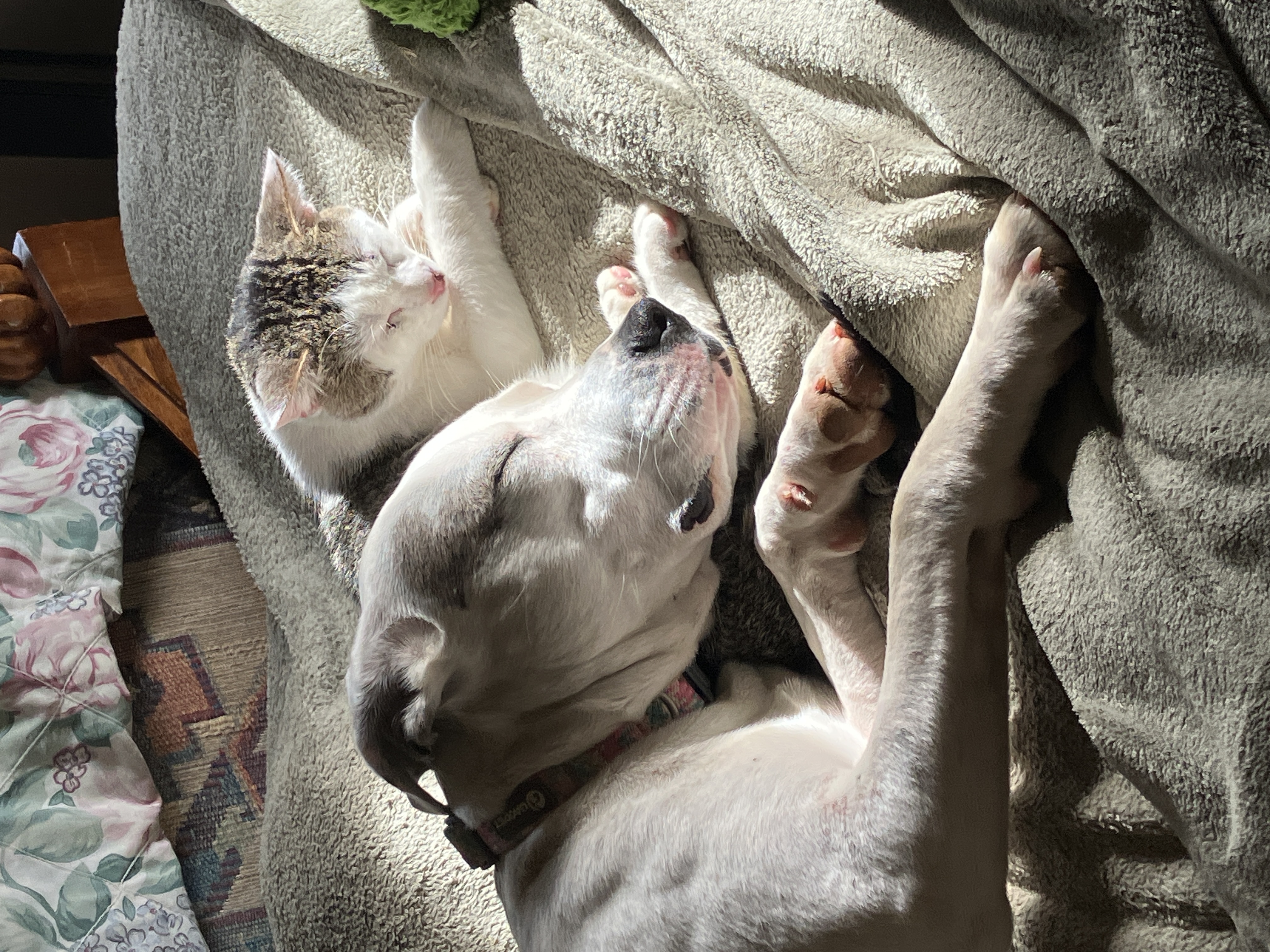
**Ears relaxed to the side** = the sweet spot. This is a calm, neutral dog. You want to see this on the regular.
If your dog has floppy ears, watch the base of the ear near the skull — even when the tips hang, the base often still moves. It's a subtle tell but it's there.
The Tail — Yes, It's Complicated
The old advice was 'a wagging tail means a happy dog.' That's the most dangerous oversimplification in dog ownership.
**High, stiff wag** = arousal and potential aggression. Think about a horse's high tail carriage — same energy. The dog is excited, but not calmly happy.
**Low, loose wag** = genuine friendliness. The whole back half is involved. It's a happy dog.
**Tucked between the legs** = fear, anxiety, submission. The dog wants to be smaller.
**Slow, stiff wag with tense body** = uncertainty. Something is making her uneasy. Give her space.
**Rapid, helicopter wag** = pure joy. This is the one everyone recognizes. Back half wiggling, whole dog happy. You've seen this. You want this.
A happy dog with a great leash creates that helicopter wag on walks. The [Foam Handle Leash from Chewy](https://www.chewy.com/dp/139115?utm_source=affiliate&utm_medium=affiliate&utm_campaign=wagwise) makes walks comfortable enough that your dog can focus on being happy instead of managing discomfort.
The Mouth — Smile, But Know What It Means
**Yawning when not tired** = stress. Dogs yawn when they're anxious, not just sleepy. If your dog yawns during a vet visit or a training session, she's telling you she's uncomfortable.
**Lip licking or tongue flick** = also stress. A quick dart of the tongue across the lips when nothing is nearby is a pacifying signal. She's trying to calm herself — or calm a situation she finds threatening.
**Hard panting with tight lips** = significant stress or heat. If it's not hot and she's panting hard, something is wrong. Check the environment.
**The 'play pant'** = relaxed, happy, ready to play. Mouth open, tongue out, body loose. This is good.
A stressed dog is less able to learn. If your dog is showing stress signals, take a break. Use a treat pouch to reward calm behavior — when she relaxes, treat immediately. [This basic pouch on Chewy](https://www.chewy.com/dp/138108?utm_source=affiliate&utm_medium=affiliate&utm_campaign=wagwise) works fine and won't break the bank.
The Body — The Full Picture
**Shaking off** after a stressful event — like a vet visit or an interaction with another dog — is how dogs discharge tension. Think of it like a sigh after a long day. It's healthy.
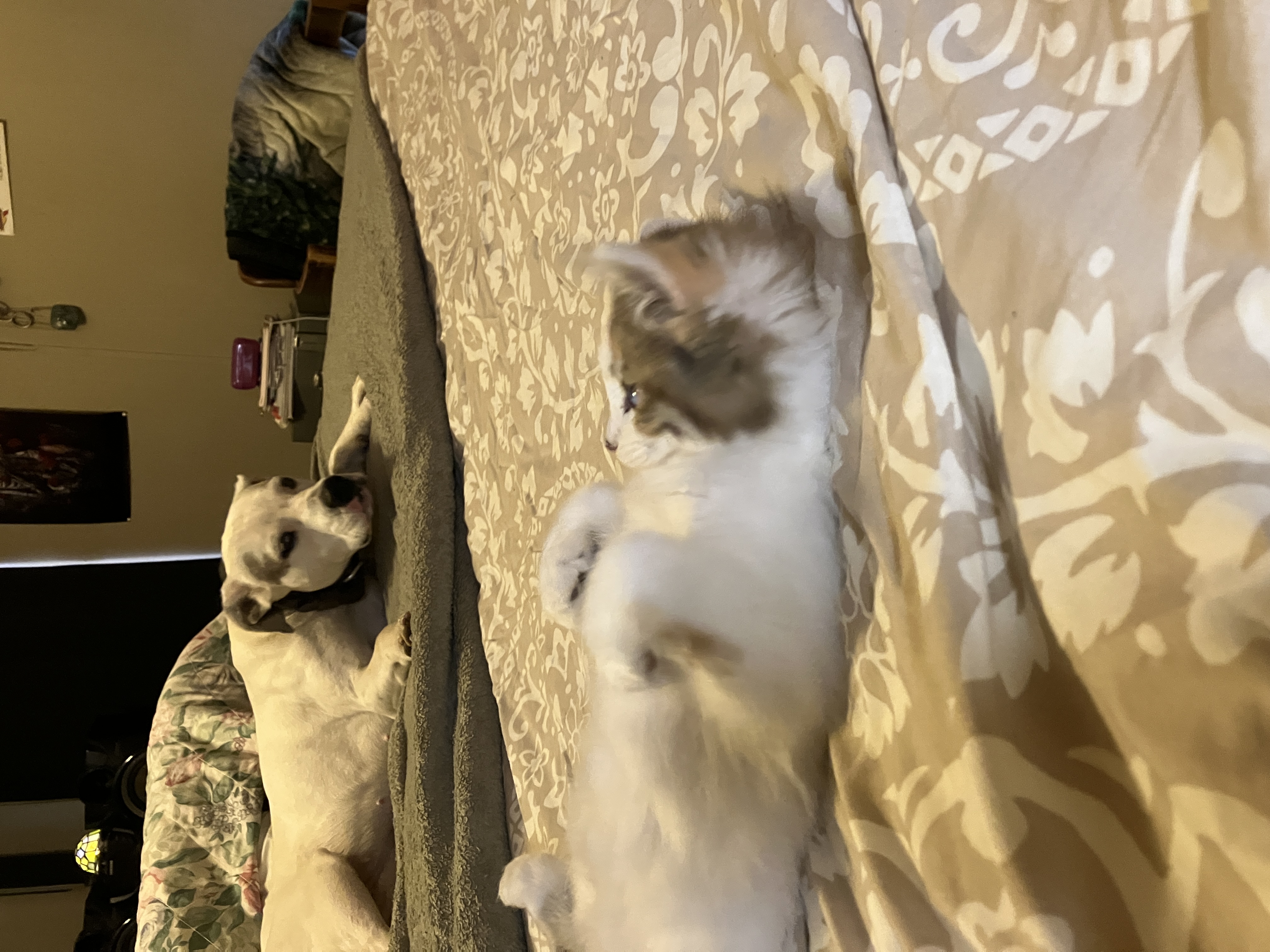
**The play bow** — front legs down, butt in the air — is an invitation to play. It's a good signal. It means 'everything I'm about to do is in fun.'
**Showing the belly** = trust and submission. A dog on her back is either asking for belly rubs (when relaxed) or showing submission (when tense and showing her belly as a pacifying gesture). Read the rest of the body. Is she loose and wiggly? Happy belly rubs. Is she stiff? She's asking for space.
**Raised hackles** = piloerection. The hair stands up along the spine. This doesn't always mean aggression — it means the dog is aroused. Could be excitement, fear, or just high energy. Read the rest of the body.
**Trying to walk away** = clear communication. If your dog turns her back on you or tries to leave a situation, she is telling you she's done. Respect it.
The Meta-Skill: Context
No single signal tells the full story. A wagging tail at the vet means something different than a wagging tail at the dog park. A yawn at home during a nap is different from a yawn at the groomer.
The skill is reading the whole dog in context. Look at: eyes, ears, tail, mouth, body posture, and what's happening in the environment. You're triangulating.
Get good at this and you'll catch problems before they escalate. A dog showing early stress signals can be redirected. A dog who's reached hard stare or lip lifting is already at Level 5. Prevention beats intervention.
Dogs communicate clearly. The problem is we weren't taught the language. Now you have the vocabulary. Start watching.
Gear That Actually Helps
These links go to Chewy and Petco — we earn a small commission if you buy, at no extra cost to you. We only link stuff we've actually used and liked.
As an affiliate, we may earn a commission from qualifying purchases. This doesn't influence our recommendations.
Want the full training program? Here's what I'd recommend.
Stop guessing — get a step-by-step system
These blog posts give you the concepts. If you want the actual playbook — when to do what, how to troubleshoot, the whole thing in order — there's a program that walks you through it start to finish. No fluff, no hype. Just what works.
See the training program →Full disclosure: this is an affiliate link. We only recommend things we'd use ourselves. If it's on this page, it's because we think it's actually worth your time.